


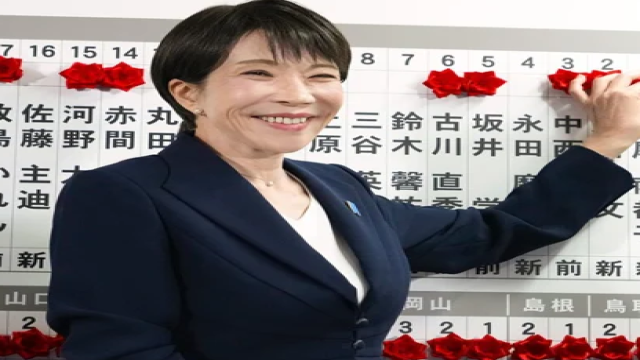
TOKYO, Feb 10, 2026 (V7N) – Japan’s ruling Liberal Democratic Party (LDP), led by Prime Minister Sanae Takaichi, secured a decisive victory in weekend snap elections, winning 315 seats and achieving a two-thirds majority in the lower house, according to official results released Tuesday.
The result marks the strongest electoral performance in the LDP’s history and gives Japan’s first woman prime minister a solid mandate to govern the country of about 123 million people over the next four years.
The LDP’s coalition partner, the Japan Innovation Party (JIP), won 36 seats, bringing the ruling bloc’s total to 351 seats in the 465-member House of Representatives, according to data from the internal affairs ministry. In the previous parliament, the LDP held 198 seats, while the JIP had 34.
Among smaller parties, the Sanseito party increased its representation to 15 seats from two. Meanwhile, the Centrist Reform Alliance—formed by the main opposition Constitutional Democratic Party and the LDP’s former partner Komeito—saw its presence sharply reduced, securing 49 seats compared with 167 previously.
With a two-thirds majority, the government can override decisions by the upper house, where the ruling coalition does not command a majority. The result also gives Prime Minister Takaichi greater latitude to pursue longer-term policy initiatives, including the possibility of initiating discussions on constitutional reform, an issue she has previously highlighted.
“This marks the beginning of a significant responsibility to make Japan stronger and more prosperous,” Takaichi, 64, said at a news conference on Monday. She added that voters appeared to support her call for what she described as a necessary shift in national policy direction.
Takaichi, who became Japan’s fifth prime minister in as many years last October, called the snap election last month while enjoying strong early approval ratings. While her premiership is historic, she has generally avoided emphasizing gender issues in Japan’s traditionally male-dominated political landscape. The number of women lawmakers declined slightly to 68 from 73, according to official figures.
The prime minister has gained notable popularity among younger voters, with her public appearances and informal moments drawing attention on social media.
Policy outlook
Despite the strong mandate, the new government faces a range of challenges. These include easing the impact of rising living costs on households, supporting economic growth, and maintaining investor confidence given Japan’s high public debt levels.
The administration is also expected to follow through on commitments to deepen economic cooperation with the United States, including plans for large-scale investment. At the same time, Takaichi has indicated she intends to review immigration policies, reflecting growing public debate on the issue.
On regional and security matters, Japan’s relations with neighboring countries will remain an important focus. Tokyo continues to balance its close alliance with Washington with efforts to manage complex ties in East Asia, including with China, while also pursuing a gradual strengthening of its defence capabilities.
Observers say the scale of the election victory gives Prime Minister Takaichi a rare opportunity in Japanese politics to pursue policy continuity, while the coming months will test how effectively the government translates electoral support into tangible outcomes.
END/WD/RH/
























Comment: