


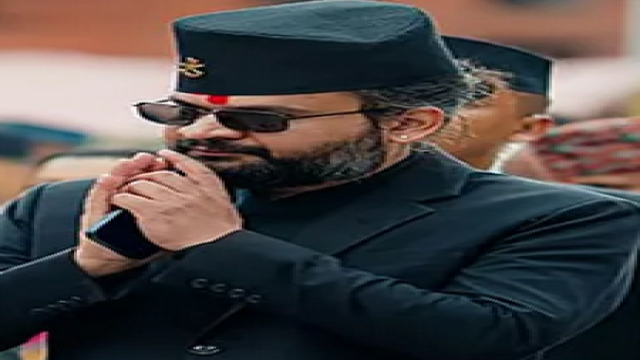
KATHMANDU, Feb 10, (V7N) – Nepal’s rapper-turned-politician Balendra Shah, widely known as “Balen,” is preparing for a high-profile electoral contest as he readies to face veteran leader and former prime minister KP Sharma Oli in the upcoming general elections.
The 35-year-old, currently a prominent youth figure in Nepali politics, has drawn national and international attention for his unconventional journey from the underground hip-hop scene to the political mainstream. He rose to prominence after supporting last year’s mass protests that led to the fall of Oli’s Marxist-led government, positioning himself as a symbol of generational change.
Born in Kathmandu in 1990, Shah grew up during Nepal’s decade-long Maoist insurgency, a conflict that reshaped the country’s political landscape and ended the monarchy. Trained as a civil engineer, he initially gained recognition through music that highlighted social issues such as inequality, accountability, and governance—topics that continue to influence his political outlook.
Speaking to AFP during his campaign ahead of the March 5 polls, Shah said creativity and public service are closely linked. “When someone involved in politics also engages in literature or music, it brings emotional awareness,” he said. “That sensitivity is important for leadership.”
Shah’s strong online presence helped him secure a surprise victory in 2022 as the first independent mayor of Kathmandu, breaking the grip of traditional parties in the capital. As mayor, he pursued initiatives aimed at improving civic discipline, urban management, and revenue compliance, earning both praise for decisiveness and criticism for a direct, sometimes confrontational, style.
In January, Shah stepped down as mayor to contest the general election—the first since last year’s protests that reshaped Nepal’s political environment. Rather than choosing a safer seat, he opted to challenge Oli in Jhapa-5, a largely rural constituency in southeastern Nepal.
“Running against a senior political figure shows that I am not looking for an easy path,” Shah said, adding that the move reflects a desire to engage directly with long-standing political challenges.
In December, Shah joined the centrist Rastriya Swatantra Party (RSP), led by media personality-turned-politician Rabi Lamichhane. The party emerged as a significant force in the 2022 elections by challenging established political actors. If the RSP secures a parliamentary majority, Shah could be in line for a top leadership role.
Outlining his vision, Shah described a development model combining market-oriented growth with social protection. “We believe in a liberal economic system with social justice,” he said, citing priorities such as access to education and healthcare for disadvantaged groups.
Shah also played a visible role during last September’s youth-led demonstrations, initially triggered by public concern over digital freedoms before evolving into a broader call for better governance and economic opportunity. The unrest underscored widespread public frustration, particularly among younger citizens.
Despite his political ambitions, Shah says he will continue making music. “Music is a way to express ideas and emotions,” he said. “No matter what position I hold, that part of me will remain.”
Observers say the contest between Shah and Oli will be closely watched as a test of whether Nepal’s younger, reform-oriented political voices can translate popular appeal into national leadership in a rapidly evolving political landscape.
END/WD/RH/








Comment: