


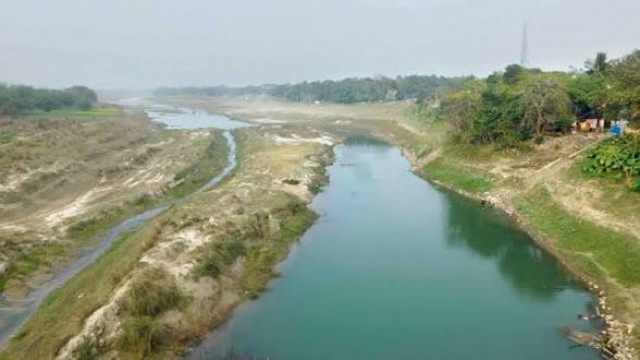
BAGERHAT, March 17, 2026 (V7N) – The Bhairab River in Kachua upazila is facing a grave existential crisis due to illegal encroachment and unchecked pollution, sparking alarm among residents and environmentalists.
Once a thriving waterway navigated by launches, steamers, and boats, the river has now narrowed drastically. Influential land grabbers have allegedly occupied large portions of the riverbanks, building permanent and temporary structures. In several areas, parts of the river have been filled to construct shops and houses, obstructing the natural flow of water.
Pollution has compounded the crisis. Waste from hotels and restaurants in Kachua Bazar—including rotting food, plastic, and untreated sewage—is being dumped directly into the river, contaminating the water and creating a foul odor.
Local resident SM Wazed Ali, a retired teacher, lamented: “We used to see large vessels navigating this river during our childhood. Now it has become so narrow and polluted that even touching the water causes itching.”
Community frustration is mounting over what many describe as a lack of sustained administrative action. Occasional eviction drives are carried out, but encroachment reportedly resumes soon afterward.
- Professor Siddique, a local academic, urged authorities to conduct a survey based on the CS map to determine the river’s original boundaries and remove illegal structures.
- Community leaders stressed stricter enforcement of environmental laws, proper waste management systems, and installation of dustbins to prevent dumping.
- BNP leader Sardar Zahid, a Kachua businessman, warned that without urgent intervention, the Bhairab River could disappear entirely, causing severe ecological damage. He called for the river’s inclusion in ongoing canal excavation programmes.
Kachua Upazila Nirbahi Officer (UNO) Md. Ali Hasan acknowledged the seriousness of the situation. He said the administration, in coordination with the Water Development Board and other departments, is reviewing the issue. Plans are underway to conduct surveys, identify illegal encroachments, and raise awareness among stakeholders. Hasan emphasized that legal action will be taken where necessary, adding: “River protection is a shared responsibility.”
END/AJ/RH











Comment: