


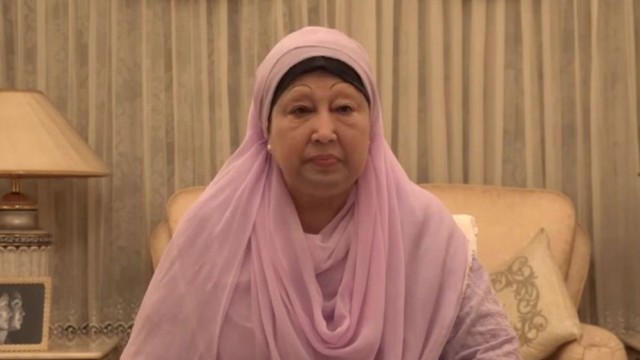
Dhaka, Dec 30 (V7N)- BNP Chairperson and former Prime Minister Begum Khaleda Zia has passed away. Inna lillahi wa inna ilaihi raji'un. She died at 6:00 am on Tuesday while undergoing treatment at Evercare Hospital in the capital.
The matter was confirmed through the official verified Facebook page of the Bangladesh Nationalist Party (BNP). The statement said, “BNP Chairperson and former Prime Minister Begum Khaleda Zia passed away at 6 am today, just after Fajr prayer. Inna lillahi wa inna ilaihi raji'un. We pray for the forgiveness of her soul and request everyone to pray for the departed soul.”
Earlier, Khaleda Zia’s personal physician Dr. Zahid had said late Monday night that it was uncertain how much she would be able to overcome the critical condition. Her son BNP Acting Chairman Tarique Rahman and other family members were present at the hospital, while members of the medical board were monitoring her condition round the clock.
Family members, including Tarique Rahman, left Evercare Hospital around 2:00 am to check on her condition. Her elder sister Selina Islam, younger brother Shamim Eskander, Tarique Rahman’s daughter Jaima Rahman, and late Arafat Rahman Coco’s daughter Jahiya Rahman also visited the hospital. BNP Secretary General Mirza Fakhrul Islam Alamgir arrived at the hospital at 10:23 pm but left around 12:20 am.
After a long gap of 17 years, Tarique Rahman returned to the country on December 25 and visited his ailing mother. Since then, he had been visiting her regularly at the hospital.
Begum Khaleda Zia was admitted to Evercare Hospital on November 23. As her condition deteriorated, she was later shifted to the Critical Care Unit (CCU).
Born on August 15, 1945, in Dinajpur, Begum Khaleda Zia was the first female Prime Minister of Bangladesh. She entered active politics in 1981 following the assassination of her husband, martyred President Ziaur Rahman, and was elected BNP Chairperson in 1984.
She served as Prime Minister three times—from 1991 to 1996, briefly in February 1996, and from 2001 to 2006. Her role in restoring democracy, resisting military rule, and strengthening multiparty politics remains a significant chapter in Bangladesh’s political history.
Since 2007, she faced multiple corruption cases and was convicted in the Zia Orphanage Trust case in 2018, resulting in imprisonment. Due to severe health complications, she later received treatment under special arrangements.
Her death marks the end of an era in Bangladesh’s political landscape.
END/SMA/AJ














Comment: