


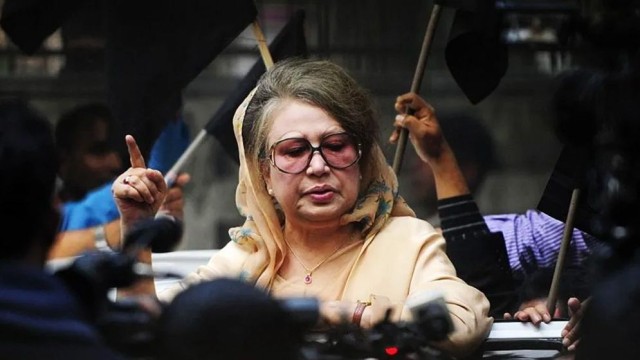
Dhaka, Jan 02 (V7N) – Since independence, Bangladesh has witnessed numerous changes in political leadership. However, analysts say the current transition is unprecedented. With the death of former Prime Minister and BNP Chairperson Khaleda Zia, all major political parties now lack a leader with prior experience as head of government, raising concerns about a potential leadership vacuum in national politics.
Although the Bangladesh Nationalist Party (BNP) has experience in running governments, observers note that this is the first time in the party’s history that it will move forward without a leader who has previously served as prime minister. Analysts warn that the absence of a towering figure like Khaleda Zia may create uncertainty and instability in the country’s political landscape.
Political observers emphasize that those who assume leadership roles in both government and party politics must draw lessons from Bangladesh’s political past. Restoring public trust in electoral politics, establishing credible individual leadership, and ensuring good governance are among the major challenges ahead.
In the post-uprising political reality, BNP has emerged as the largest political force in the country. After the assassination of party founder Ziaur Rahman, Khaleda Zia took charge of the party and led both the government and the opposition for more than four decades. Her departure marks the end of an era, and for the first time, BNP faces a future without a leader seasoned in governing the state.
Since Khaleda Zia’s imprisonment in 2018, BNP Acting Chairman Tarique Rahman has effectively been leading the party. Although Khaleda Zia remained a guiding presence, Tarique Rahman has experienced both favorable and difficult phases of politics alongside her.
Grassroots leaders and activists believe Tarique Rahman will carry forward Khaleda Zia’s political ideals. However, many acknowledge that the task will not be easy, particularly given his long absence from the country and the complex social and political realities on the ground.
Party leaders at the grassroots level see Tarique Rahman as a key figure in filling the leadership void. They hope he will play a decisive role in restoring democracy, strengthening the rule of law, and establishing a peaceful political environment.
Political analysts also view Tarique Rahman’s role as crucial at this juncture. In the absence of Khaleda Zia, expectations surrounding the legacy of the Zia family have increased, placing additional pressure on his political activities.
Political analyst Professor Dr. Asif M Shahan said that the combination of Tarique Rahman’s political experience and the vision he presents upon returning to the country could help overcome the burden of high expectations. However, he noted that whether the new leadership truly understands the magnitude of the vacuum left by Khaleda Zia will be an equally decisive factor.
Since 2007, the so-called ‘minus-two’ formula has remained a sensitive topic in political discourse, reflecting the deep polarization in Bangladesh’s politics. Analysts say the current phase will largely revolve around filling the leadership void left by Khaleda Zia. Many believe that the future of Bangladesh’s governance and political leadership will depend on individual skill, wisdom, political maturity and public trust.
Another political analyst, Professor Sabbir Ahmed, said that Tarique Rahman possesses a blend of political experience and maturity, along with behind-the-scenes strategic abilities that could play a constructive role in shaping future politics.
However, analysts caution that Khaleda Zia’s long and influential political career will continue to cast a strong shadow over electoral politics. They argue that Tarique Rahman’s political future will largely depend on how prudently and effectively he follows the path laid down by his predecessors.
END/SMA/AJ














Comment: