


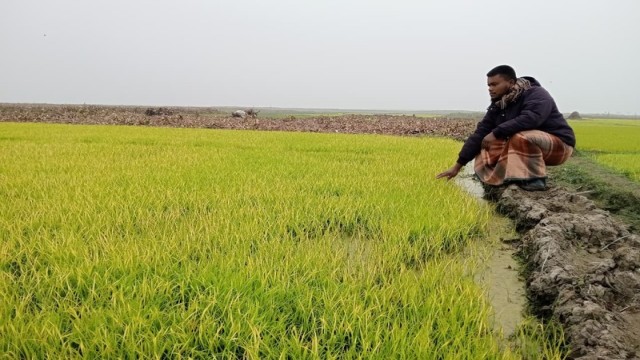
Natore, Jan 06 (V7N) — Hundreds of farmers in the Halti Beel area of Naldanga upazila in Natore district are facing growing anxiety as an intense cold wave and dense fog continue to damage Boro seedbeds ahead of the upcoming Boro rice cultivation season.
Due to prolonged low temperatures and limited sunlight, Boro seedlings are turning yellow, suffering from leaf rot, and gradually dying. Farmers fear that the damage to seedbeds will significantly increase cultivation costs this season, as many may need to prepare seedbeds again.
Officials from the Agriculture Department said that late-planted Boro seedbeds are the most affected by the current weather conditions. To minimize losses, farmers have been advised to cover seedbeds with polythene sheets at night and follow other precautionary measures. However, severe cold has also made it extremely difficult for agricultural day labourers to work in the fields, further disrupting farming activities.
For the past week, Natore has experienced dense fog and bone-chilling cold, with morning sunlight almost entirely absent. Although there was brief sunshine around noon on two days earlier in the week, temperatures have again dropped since Wednesday, hovering around 10 degrees Celsius. The harsh weather has intensified cold-related stress on crops and field workers alike.
In Halti Beel, Boro seedbeds have already reached a stage suitable for transplantation. However, many have been damaged by cold injury, commonly known as leaf rot disease. Farmers report that even pesticide applications have failed to control the damage.
Farmer Ishaq Ali from Tegharia village said he prepared Boro seedbeds on five kathas of land to cultivate rice on seven bighas. He said continuous cold and fog have caused the seedlings’ leaves to yellow and rot, leaving him helpless despite repeated pesticide spraying.
Another farmer, Asidul Islam, said both his Boro seedbeds and onion fields have been affected by leaf blight disease. He complained that farmers are not receiving timely advice from agricultural officers, adding that hundreds of farmers in the area are facing similar losses.
As the situation worsens, both labour and production costs for Boro cultivation are increasing. Some farmers have taken preventive steps by covering seedbeds with polythene sheets at night, but many allege insufficient support and guidance from local agricultural offices.
Naldanga Upazila Agriculture Extension Officer Sajjad Hossain said a target has been set to cultivate Boro rice on 8,000 hectares of land in the upazila this year, against which seedbeds have already been prepared on 562 hectares. He said well-established seedbeds are not at immediate risk, but late-planted ones may suffer damage due to dense fog and cold.
He expressed optimism that losses would remain limited if weather conditions improve soon. He also advised farmers to drain cold water from seedbeds daily, apply fresh irrigation water, and use polythene covers at night to protect seedlings from further cold-related damage.
END/RAN/SMA/




















Comment: