
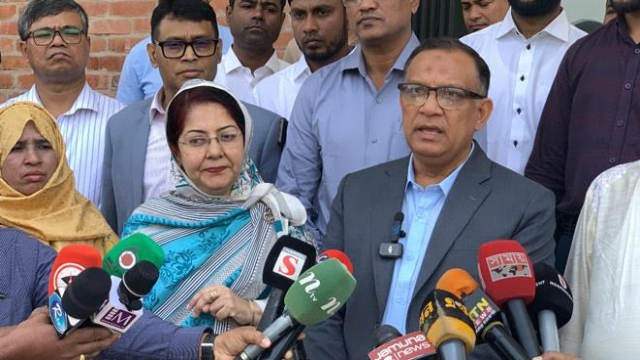
RAJSHAHI, April 12, (V7N)— In a major move to restore the lost glory of the traditional silk sector, State Minister for Textiles and Jute, Shariful Alam, announced a comprehensive modernization plan during his visit to the Rajshahi Silk Research and Training Institute on Saturday. Emphasizing that Rajshahi silk is a national asset rather than a regional one, the minister confirmed that field-level activities have already commenced to upgrade the industry and transform it into a globally competitive trade.
The minister highlighted the rich historical foundations of the sector, noting that the Rajshahi Silk Board was established in 1977 by former President Ziaur Rahman, with further advancements made during the tenure of former Prime Minister Begum Khaleda Zia. Under the current administration's guidance, the government aims to blend this historical legacy with modern technology and intensive research to move the industry forward.
A critical challenge identified during the visit is the country's overwhelming dependence on imports. Currently, Bangladesh has an annual demand of 400 to 450 metric tons of silk, yet nearly 90% of this is brought in from abroad. This dependency arose as local factories faced closures or fell behind in production efficiency, a trend the government now seeks to reverse through strategic interventions.
To tackle this crisis, the government is prioritizing the expansion of silkworm rearing (sericulture) and the development of high-yield mulberry plants. By focusing on scientific research to improve the quality of locally produced silk yarn, the authorities hope to slash import reliance and empower local manufacturers to meet domestic demand while maintaining international standards.
Minister Alam expressed deep concern regarding the future of traditional artisans, known as ‘Bosnis.’ Currently, there are approximately 11,500 such artisans in the country, but the majority are elderly. He warned that without an immediate focus on training the younger generation, this ancestral craft risks extinction, making specialized vocational programs a core part of the new revival strategy.
The plan also includes reopening closed silk factories and attracting both domestic and foreign investment to fuel growth. Beyond production, the government is looking at market expansion in countries like China and Japan, which are traditional silk powerhouses. Coordinating with various stakeholders and ministries, the administration aims to create a seamless supply chain from the mulberry field to the international fashion runway.
Accompanying the minister were high-ranking officials, including the Director General of the Bangladesh Silk Development Board, Md. Toufiq Al Mahmud, and Textiles Secretary Bilkis Jahan Rimi. The visit concluded with a strong sense of optimism that these coordinated steps will breathe new life into the Rajshahi silk industry, fostering economic growth and preserving a vital piece of Bangladeshi heritage.
END/RAR/RH/

















Comment: