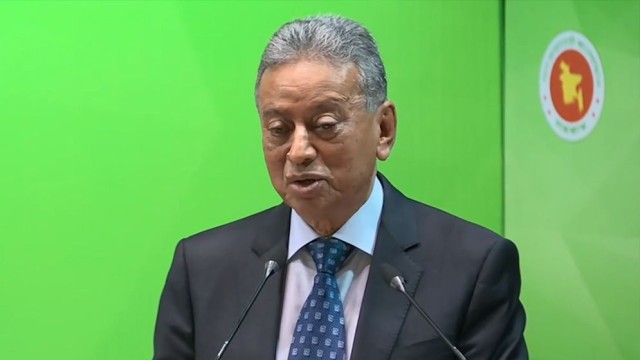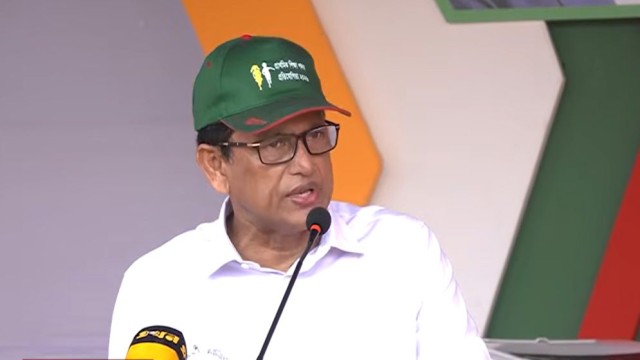
Dhaka, Jun 15 (V7N) — Education and Primary and Mass Education Minister Dr. A.N.M. Ehsanul Haque Milon stated on Monday that the nation's future generation should not merely chase the "golden deer" of a GPA-5. Instead, the academic framework must foster creativity, innovation, and a joyful, play-based learning environment.
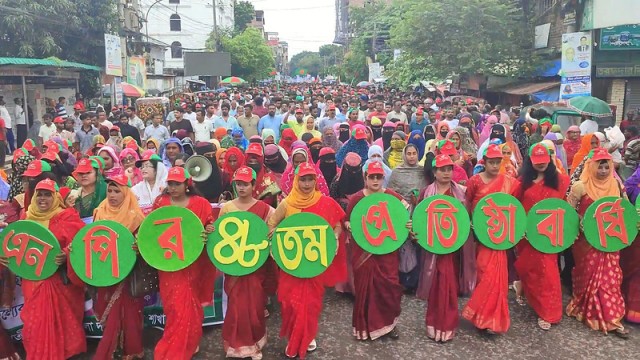
The Minister made these remarks as the chief guest during the grand inauguration ceremony of the "National Primary Education Medal Competition 2026," held at the Government Physical Education College playground in Mohammadpur, Dhaka, on Monday morning (June 15).
Highlighting systemic technological upgrades, Minister Milon outlined the integration of multimedia classrooms and the "One Teacher, One Tab" initiative designed to facilitate a more interactive learning ecosystem. Through these specialized tablets, a teacher can instantly track classroom enrollment, monitor the physical and mental well-being of students, evaluate family conditions, and log attendance. The device will also serve as a central tool to guide teachers in delivering joyful, modern lessons.
The Minister confirmed that the school mid-day meal program has successfully commenced, with dedicated financial allocations secured for primary schools in the upcoming national budget.
Detailing upcoming curriculum overhauls, Dr. Milon announced that sports, cultural activities, and formal debate education have been officially integrated starting from the fourth grade. Furthermore, the core concept of human resource development will be introduced in the sixth grade, with a progressive, step-by-step emphasis placed on technical and vocational training across higher grades.
The Education Minister revealed that the current fiscal year marks the highest budget allocation for the education sector in the country's history. The funding has been scaled up from the previous 1.69 percent of the GDP (approximately BDT 87,000 crore) to a robust 2 percent of the GDP, translating to a massive BDT 1,36,000 crore allocation for the Ministry of Education.
To accelerate technical proficiency and transform the youth into a skilled workforce, the government has already established 53 polytechnic institutes. In addition, development work is underway to establish 329 technical schools and colleges across the country, a project targeted for full completion within the next two years.
END/SMA/AJ