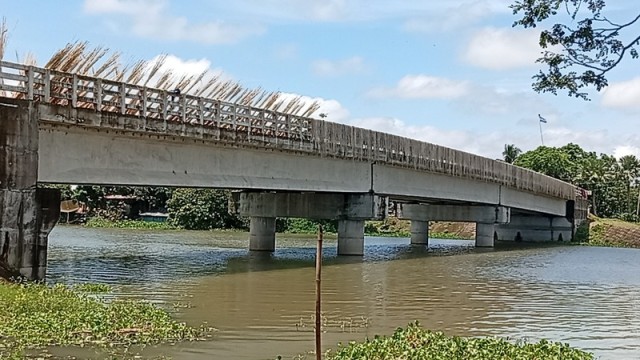
Rangamati, Aug 18 (V7N) — The public display of signboards advertising the availability of local and foreign alcoholic beverages in the Hanging Bridge area of Rangamati has triggered controversy and raised questions over regulatory oversight in the popular tourist destination.
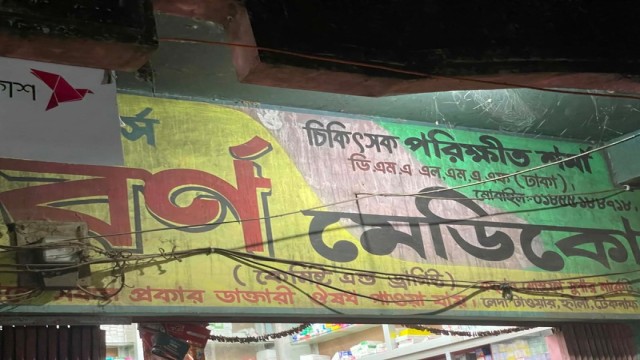
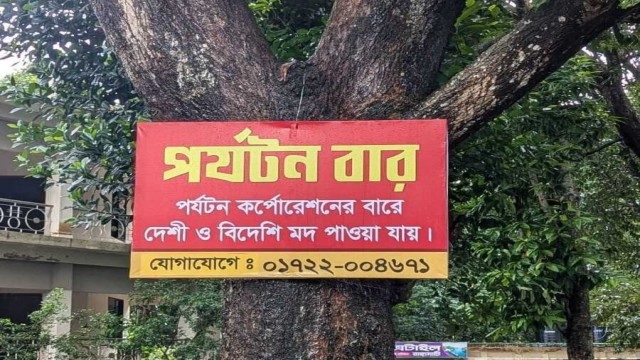
The signboards, which included information about the availability of alcoholic drinks and a mobile phone number, were reportedly installed by HM Enterprise, the company that has taken a tourism bar under lease from Bangladesh Parjatan Corporation.
The advertisements were displayed in a busy public area during the daytime, attracting the attention of local residents and tourists. Images of the signboards later circulated on social media, prompting criticism over the public promotion of alcohol in a prominent tourist area frequented by families, students and visitors.
Following the controversy, police informed Bangladesh Parjatan Corporation about the matter. The corporation's manager, Alok Bikash Chakma, subsequently had the signboards removed.
Papon Banik, manager of HM Enterprise, said the company had leased the bar from Bangladesh Parjatan Corporation and installed the signboards to attract customers because sales had not been satisfactory.
He claimed that the company had obtained permission from the Department of Narcotics Control (DNC) to display the signboards. However, he acknowledged that no separate permission had been obtained from Bangladesh Parjatan Corporation.
“We pay taxes to the government and sell certified locally produced Carew alcohol under our licence. We have a bar in the tourist area and installed the signboard to inform tourists about it,” Banik said.
The DNC, however, rejected the claim.
Nahid Hasan Saurav, assistant director of the DNC in Rangamati, holding additional charge, said no such permission had been issued by the department.
“We did not give any such permission, nor was the matter discussed with us. Those responsible have committed an offence. The matter will be examined and necessary action will be taken,” he said.
Alok Bikash Chakma, manager of Rangamati Tourism Corporation, said the corporation had never authorised such activities.
“I have been working here for a long time. The Tourism Corporation has never undertaken such an activity. The leased operator installed the signboards in violation of the rules,” he said.
Rangamati Superintendent of Police Muhammad Abdur Rakib, BPM, also said displaying such signboards in public places was unlawful and could create confusion.
The incident has raised broader questions over whether a licence to operate an authorised bar automatically permits a business to advertise alcohol publicly, particularly on premises controlled by a government tourism agency.
Local residents and civil society representatives have expressed concern that visible alcohol advertising in a family-oriented tourist area could create discomfort among visitors and expose young people to such promotions.
They have called for stronger monitoring of commercial activities in tourist zones and urged authorities to determine whether any written permission was obtained for the advertisements and, if so, whether it was valid under the applicable regulations.
Although the signboards have been removed following police intervention, questions remain over who authorised their installation, whether any regulations were breached and whether adequate coordination existed among the relevant authorities.
Civic representatives have urged the authorities not only to remove unauthorised advertisements but also to investigate the incident and strengthen oversight to prevent similar displays in Rangamati's tourist areas in the future.
END/AMR/SMA/