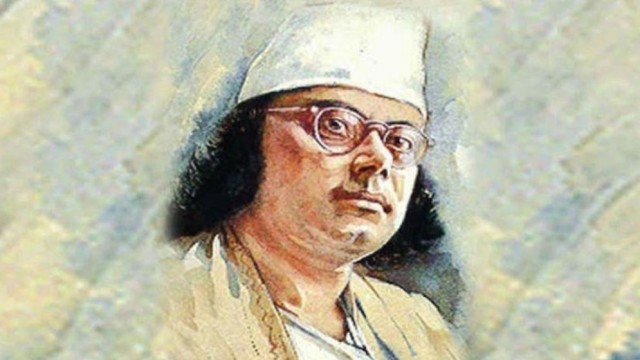
Dhaka, May 25 (V7N) – The nation is observing the 127th birth anniversary of national poet Kazi Nazrul Islam with due respect and solemnity.
Known as the “Rebel Poet” of Bengali literature, Nazrul remains an enduring symbol of resistance against injustice, oppression and inequality. Through his fiery poetry, songs and writings, he gave voice to the oppressed and inspired generations to stand against tyranny and discrimination.
A rare creative genius, Nazrul established himself not only as a poet, but also as a writer, lyricist, playwright, editor, composer and actor. His remarkable contributions enriched every branch of Bengali literature and culture.
Nazrul was born on the 11th of Jyaishtha, 1306 Bengali calendar, in Churulia village of Asansol in the Burdwan district of present-day West Bengal, India. From childhood to youth, his life was marked by hardship and struggle. At different stages of his life, he worked in various professions and joined the British Indian Army in 1917, where he also experienced the realities of the First World War.
During his literary career, Nazrul came into contact with many prominent writers and intellectuals of the time. In 1922, he published the magazine Dhumketu, which became widely influential. His revolutionary writings soon attracted the attention of British colonial authorities. For his poem Anandamayir Agamane, he was sentenced to one year of rigorous imprisonment.
In a literary career spanning just over two decades, Nazrul composed around 3,000 songs and wrote numerous poems, novels, short stories and essays. His contributions to music and cinema were also significant. He directed films and acted in the movie Dhruv, proving his versatility beyond poetry.
Nazrul was brought to independent Bangladesh with his family in 1972. He spent the final years of his life in the country and passed away on August 29, 1976, at the then PG Hospital in Dhaka. According to his wishes, he was laid to rest beside the central mosque of University of Dhaka.
On the occasion of his birth anniversary, various political, cultural and social organizations have organized discussions, tribute ceremonies and cultural programs across the country to honor the legacy of the poet whose works continue to inspire millions.
END/SMA/AJ