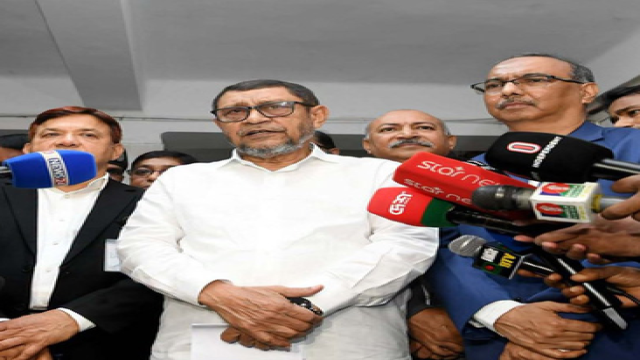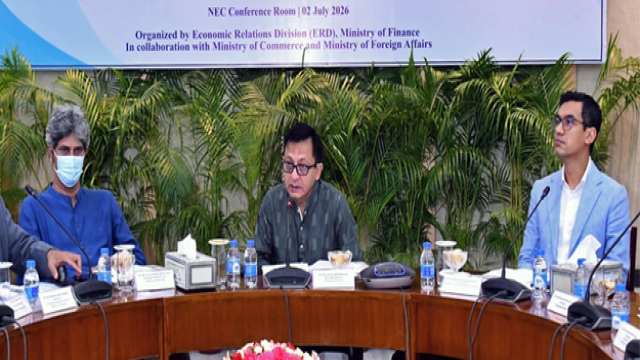
DHAKA, July 2, (V7N): Commerce Minister Khandakar Abdul Muktadir clarified that Bangladesh’s formal request for a three-year extension of its preparatory period for graduation from the Least Developed Country (LDC) category is a strategic move to secure a stable and sustainable transition, rather than a bid to slow down the country's development momentum.
"We are not seeking this deferral to stall," Minister Muktadir stated during his presidential address at a high-level seminar titled "Bangladesh's Preparedness for LDC Graduation and the Rationale for Extension of the Preparatory Period." The event, held at the NEC conference room in Agargaon, was jointly organized by the Economic Relations Division (ERD), the Ministry of Commerce, and the Ministry of Foreign Affairs to brief foreign diplomats, development partners, and international stakeholders.
The United Nations Committee for Development Policy (UNCDP) has responded positively to Bangladesh's extension request, submitting its assessment report to the UN Economic and Social Council (ECOSOC). The proposal is expected to pass through ECOSOC before heading to the United Nations General Assembly (UNGA) for a final decision.
Macroeconomic Pressures: The Commerce Minister pointed out that the current preparatory timeline has been significantly impacted by internal and external shocks, including volatile global trade, geopolitical tensions, domestic inflationary pressures, and severe supply chain fragmentation.
UNOHRLLS Evaluation: Citing a Graduation Readiness Assessment by the UN Office of the High Representative for the Least Developed Countries, Landlocked Developing Countries and Small Island Developing States, the Minister highlighted that existing conditions are not sufficiently stable for a smooth transition without this additional time.
The Reform Roadmap: To optimize the extended window, the four-month-old administration has initiated a comprehensive roadmap consisting of 25 priority reforms. These focus heavily on rebuilding macroeconomic stability, ease of doing business, trade deregulation, institutional strengthening, and human resource development.
Radical Deregulation and Ease of Doing Business
As part of the structural overhaul, Minister Muktadir announced that the government is drastically reforming the business licensing ecosystem. The state aims to cut the time required to establish a corporate entity from an average of one year down to just 14 days, enabling new firms to open letters of credit (LCs) for heavy machinery imports by the 15th day of registration.
[Current System: ~365 Days] ───► Broad Licensing Overlaps & Regulatory Delays
[Targeted Reform: 14 Days]  ───► Day 15: Corporate Entities Authorized to Open Import LCs
State Minister for Planning Zonayed Abdur Rahim Saki emphasized that the administration is working to restructure deeply fragile financial and banking sectors left behind by past regimes. He noted that the extension is crucial to maintaining international support measures (ISMs) and concessions from global lenders during this structural transition.
Maintaining Reform Momentum: European Union Ambassador Michael Miller stated that while the EU is closely evaluating deeper trade ties and future market options with Bangladesh, the extension must not cause the country to lose its legislative momentum. He emphasized that any post-graduation trade arrangement would strictly require greater market openness and a fully level playing field for foreign investments.
The seminar concluded with presentations from ERD Secretary Md. Shahriar Kader Siddiky, alongside input from Foreign Secretary Asad Alam Siam, Finance Secretary Dr. Md. Khairuzzaman Mozumder, and various corporate leaders. Attending ambassadors and high commissioners universally stressed that expanding Bangladesh's narrow tax-to-GDP ratio, stabilizing the financial sector, and aggressively diversifying exports away from single-sector garment reliance are vital prerequisites for a truly successful LDC transition by 2029.
END/AJ/RH/