Dhaka, May 17 (V7N) — If there is one word that resonates across languages, cultures, and continents, it is “football.” From remote, unelectrified villages in Africa to the world’s most advanced megacities, the game transcends geography and social boundaries, uniting people through a simple round ball.
Ancient Origins to Modern Evolution
Historically, football is believed to have evolved from ancient games such as China’s “Cuju” and the chaotic, often violent “Mob Football” of medieval England. Over centuries, the sport gradually transformed into its modern structured form, eventually spreading worldwide through British influence during the colonial era.
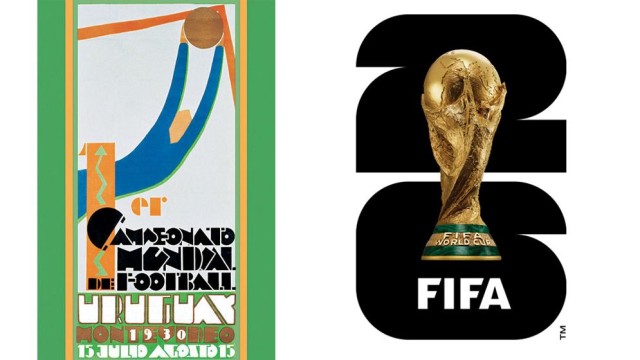
The rise of organized international football accelerated with the formation of the world governing body, FIFA. Under the vision of French administrator Jules Rimet, the idea of a global football tournament independent of the Olympic Games led to the creation of the FIFA World Cup, first held in 1930.
The Birth and Growth of the World Cup
The inaugural World Cup took place in Uruguay in 1930, where the host nation became the first champion after defeating Argentina in the final. Only 13 teams participated, reflecting the global economic challenges of the time.
Subsequent tournaments in Italy (1934) and France (1938) established the competition’s growing importance before it was suspended during World War II (1942 and 1946 editions). The tournament resumed in 1950 in Brazil, where Uruguay once again stunned the host nation to claim the title.
Legends Who Defined Eras
Football’s global appeal expanded dramatically through generations of iconic players. The 1958 Sweden World Cup marked the arrival of 17-year-old Brazilian legend Pelé, who later led Brazil to three World Cup victories (1958, 1962, and 1970), establishing the nation as the most successful team in tournament history.
The 1986 Mexico World Cup is remembered for the brilliance of Argentine superstar Diego Maradona, whose “Hand of God” and “Goal of the Century” carried Argentina to their second title and cemented his legacy as one of football’s greatest figures.
The 2002 World Cup in South Korea and Japan showcased Brazil’s attacking brilliance, featuring stars like Ronaldo Nazário and Ronaldinho, as the team secured a record fifth title.
Spain’s triumph in 2010 introduced the world to “tiki-taka” football, emphasizing possession and precision passing, while the 2022 Qatar World Cup delivered one of the most dramatic finals in history as Argentina defeated France, allowing Lionel Messi to finally lift the trophy.
Records and Achievements
Brazil remains the most successful nation in World Cup history with five titles, followed by Germany and Italy with four each. Germany’s Miroslav Klose holds the record for most goals in World Cup history with 16, while France’s Just Fontaine holds the record for most goals in a single tournament with 13 in 1958.
Pelé remains the only player to win three World Cups, while Lionel Messi is the only footballer to win the Golden Ball twice (2014 and 2022), highlighting his enduring influence on the sport.
Looking Ahead to 2026
The upcoming 2026 FIFA World Cup will mark a historic expansion, featuring 48 participating nations for the first time. Jointly hosted by the United States, Canada, and Mexico, the tournament will include 104 matches, making it the largest edition in World Cup history.
As football continues to evolve, global anticipation is building for what promises to be a new chapter in the sport’s legacy—one that continues to unite billions across the world.
END/SMA/AJ