


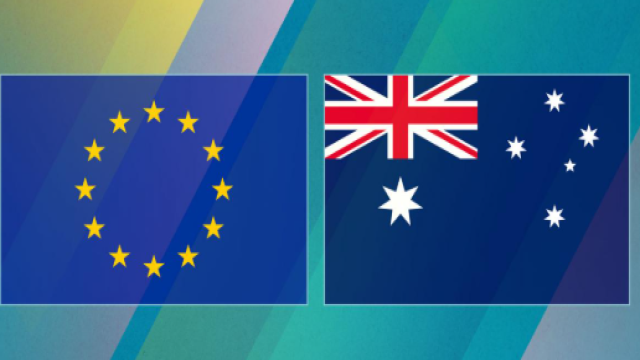
EUROPEAN, Mar 23 (V7N) – European Union (EU) chief Ursula von der Leyen and Australian Prime Minister Anthony Albanese have finalized a long-awaited free trade agreement, aimed at boosting exports and navigating global trade challenges. The deal was signed during von der Leyen's visit to Australia, accompanied by EU trade commissioner Maros Sefcovic, as both sides confront the complexities of global trade, especially in light of the ongoing conflicts in the Middle East.
The EU-Australia deal, reached after eight years of negotiations, marks a significant step in Brussels' strategy to diversify its trade relationships, reducing dependence on major economic powers like the US and China. It also comes at a critical time as both the EU and Australia face increased vulnerabilities in energy security due to the war in the Middle East, which has sent oil prices soaring.
In a speech to the Australian parliament, von der Leyen stressed the importance of cooperation, calling the world "brutal, harsh, and unforgiving," with both the EU and Australia sharing common values in tackling global challenges. "We cannot be overdependent on any supplier for such crucial ingredients," she said, referencing critical raw materials, particularly those sourced from China. "Our security is your security, and with our new security and defence partnership, we have each other's back."
Key aspects of the trade agreement include a compromise over the use of European geographical names by Australian producers. Australian winemakers will be allowed to use the term "prosecco" domestically for the next 10 years, but will have to stop using it for exports afterward. Additionally, Australian beef exports to Europe will increase by over ten times in the coming decade, though not to the level initially sought by Australian farmers.
The agreement also brings relief to European car manufacturers, as the deal raises the threshold for Australia's luxury car tax on electric vehicles, making three-quarters of EVs eligible for exemptions. The EU expects exports to Australia to grow by a third over the next decade as a result of the deal.
Von der Leyen and Albanese also signed an agreement to deepen defence cooperation, addressing the growing need for strategic partnerships in the face of global instability. This move aligns with both nations' efforts to reduce reliance on external sources of critical minerals, which have been heavily controlled by China.
The deal comes at a time when Australia is looking to diversify its export markets, following a 2020 dispute with Beijing that saw agricultural exports blocked for years. Similarly, the EU is seeking new trade partnerships to counter the impact of US tariffs and Chinese export controls.
The signing of the agreement also occurred against the backdrop of a rising energy crisis, worsened by the Middle East conflict. International Energy Agency chief Fatih Birol warned that a prolonged crisis could lead to an energy shortage not seen in decades. Von der Leyen echoed these concerns, calling for an immediate end to hostilities, noting that the situation had exposed Europe’s energy vulnerabilities.
Australia, heavily reliant on imported fuel, has felt the pressure from the global energy squeeze, further underscoring the importance of securing stable, diversified trade and energy sources in these uncertain times.
END/WD/RH/



Comment: