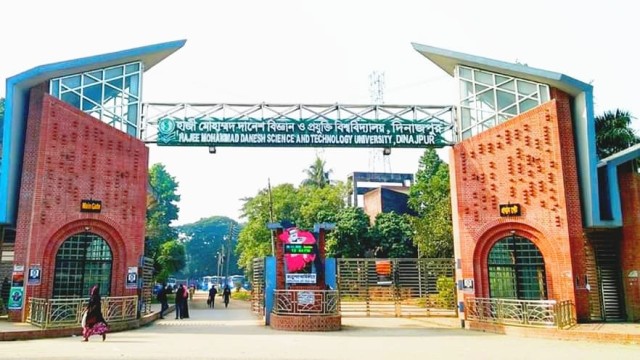
DINAJPUR, June 23, (V7N) — Researchers at Hajee Mohammad Danesh Science and Technology University (HSTU) have made a major breakthrough in food safety by creating a rapid detection method for Bacillus cereus, a bacterium linked to food poisoning and diarrheal diseases.
In a press release issued Monday night, HSTU Director of Public Relations Md. Khademul Islam said the team, led by Associate Professor Dr. Md. Atikul Haque of the Department of Microbiology, developed the diagnostic tool using Loop-Mediated Isothermal Amplification (LAMP) technology. The new method can accurately identify the harmful bacterium in just 90 minutes.
Bacillus cereus poses a serious risk to Bangladesh’s food supply chain because it can contaminate a wide range of products, researchers noted. Field sample analysis showed nearly 80 percent contained at least one toxin-producing gene from the bacterium. Animal feed had the highest contamination levels, with significant amounts also found in milk and eggs. This suggests the bacterium is more common in the country’s food system than previously thought.
Traditional PCR tests typically take three to five hours and require costly lab equipment. In contrast, the LAMP-based test produces reliable results within 90 minutes using basic tools like a water bath or heating block. Each test costs about US$2.50, making it more practical for routine monitoring.
The study found the new method is roughly 10,000 times more sensitive than conventional tests, with a diagnostic sensitivity of 96.1 percent.
Dr. Atikul Haque told BSS that bacterial detection can often be done within 40 minutes, with confirmed results in 90 minutes maximum. He said the technology is well-suited for resource-limited settings and could play a key role in protecting public health and ensuring food safety.
The innovation, developed with Noakhali Science and Technology University, was published in the international journal Frontiers in Cellular and Infection Microbiology, bringing global recognition to Bangladeshi research.
Researchers say the technology could benefit government food testing labs, veterinary diagnostic centers, dairy and poultry industries, and mobile outbreak response teams.
The team plans to expand the work through large-scale nationwide sampling and surveillance. They are also developing multiplex LAMP technology to detect multiple toxin genes in a single test and working on portable field-testing kits for on-site use.
However, the researchers said limited funding has restricted the project’s scope. They stressed that additional financial support would help deploy the technology across more regions and food products, strengthening Bangladesh’s food safety system and promoting safer food production and marketing.
END/AJ/RH