
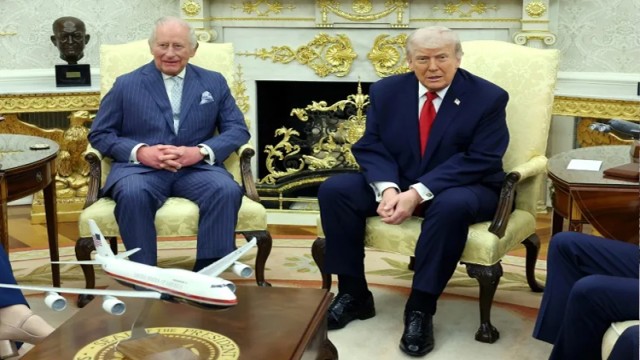
London, May 1, (V7N) — Britain’s King Charles III and Queen Camilla concluded their four-day state visit to the United States on Thursday, a trip marked by warmth, humor, and carefully calibrated diplomacy. While the visit showcased the monarch’s ability to navigate sensitive political terrain, it also underscored the complexities of the US-UK relationship under President Donald Trump.
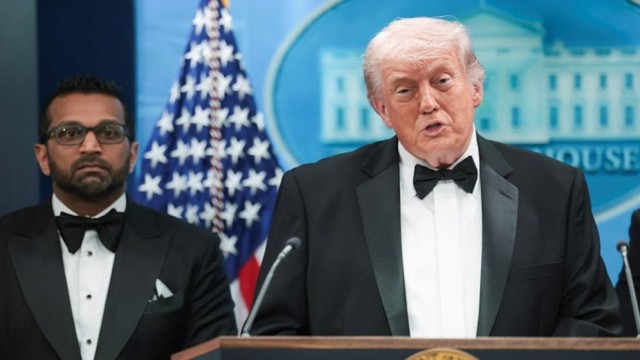
Observers noted the striking contrast between King Charles’s reserved, diplomatic demeanor and President Trump’s brash style. Yet the two appeared to share genuine rapport. At the White House, Trump joked that his Scottish-born mother had a crush on the then-prince, prompting Charles to laugh, albeit awkwardly. In another moment, Trump patted the king’s knee in the Oval Office — a breach of royal protocol — but Charles responded with good humor.
Royal commentator Richard Fitzwilliams told AFP: “There’s a personal rapport, because I think Charles is a very skilled diplomat.” The ability to maintain composure in unconventional situations highlighted Charles’s adaptability and diplomatic skill.
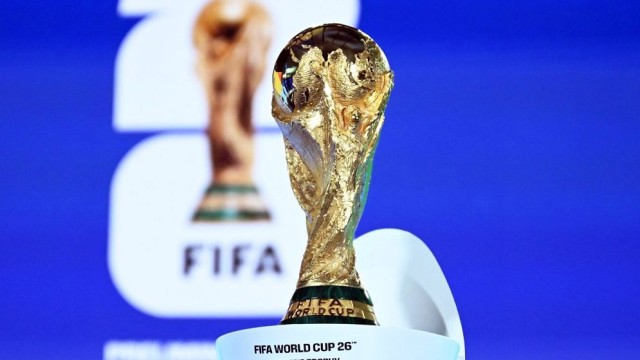
Charles displayed a lighter side during the state dinner, cracking jokes that resonated with the audience. He likened Trump’s demolition of the East Wing to British troops burning the White House in 1814, and quipped that he and Trump were “joint hosts” of the upcoming FIFA World Cup in the US, Mexico, and Canada — a subtle reminder of his role as Canada’s head of state.
He also referenced Trump’s claim that without the US, Europeans would be speaking German, adding: “Dare I say that, if it wasn’t for us, you’d be speaking French.” The remarks showcased Charles’s wit while reinforcing historical ties between the UK and US.
In a speech to Congress, Charles delivered carefully worded messages reflecting UK government positions. Amid tensions with Trump over Ukraine and Iran, he urged the US to stand firm with Western allies, stressing the need for “unyielding resolve” to secure a “just and lasting peace” in Ukraine.
He also highlighted his pride in Britain’s Royal Navy, which Trump had recently mocked, and emphasized the importance of environmental protection. These remarks, though polite, conveyed pointed reminders of Britain’s priorities and values.
Not all moments were smooth. Trump claimed Charles “would have probably helped” the US in its military offensive against Iran, a statement that raised eyebrows given the UK’s reluctance to join initial strikes. He also suggested the king agreed with him on preventing Tehran from acquiring nuclear weapons — comments that breached the convention of keeping royal conversations private.
In New York, Mayor Zohran Mamdani reignited colonial debates by calling on Charles to “return” the Koh-i-Noor diamond, taken from the Indian subcontinent in the 1800s. The episode highlighted lingering sensitivities around Britain’s imperial legacy.
British officials hoped the visit would ease tensions between Trump and Prime Minister Keir Starmer. The Times hailed Charles’s performance as a “masterclass in effective diplomacy.” In a symbolic gesture, Trump announced the removal of tariffs on Scottish whisky in honor of the royals, signaling goodwill.
Evie Aspinall of the British Foreign Policy Group noted the trip “may buy the UK some temporary reprieve from Trump,” but cautioned it would not fundamentally alter the fractured “special relationship.” Fitzwilliams agreed, saying the visit “put a positive spin on matters” but acknowledged persistent disagreements.
The visit highlighted the unique role of the monarchy in diplomacy. Unlike elected leaders, Charles can engage with foreign counterparts in ways that transcend partisan politics. His humor, tact, and symbolic gestures helped soften tensions, even as substantive policy differences remained unresolved.
For the UK, the trip underscored the importance of maintaining ties with Washington despite challenges. For the US, it demonstrated Trump’s personal warmth toward the royals, even as he remains frustrated with the UK government’s positions on Iran and NATO.
END/WD/RH
















Comment: