Dublin, Sep 14 (V7N)- US President Donald Trump has urged Ukrainian President Volodymyr Zelenskyy to stop attacks on Russian diesel fuel infrastructure, arguing that the strikes are contributing to a global fuel shortage.
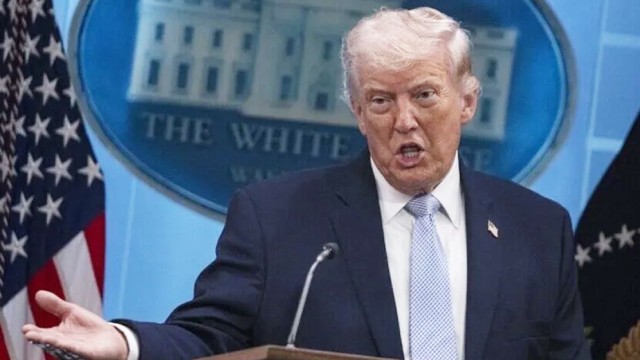
Speaking during a visit to Ireland on Sunday (September 13), Trump said he had no objection to Ukraine targeting other military objectives but urged Kyiv to avoid Russian diesel facilities.
“Mr. Zelenskyy needs to do one thing: stop attacking Russian diesel fuel facilities. Let him strike targets, but not diesel fuel infrastructure, because it is causing a diesel shortage,” Trump said.
Trump also attributed pressure on global fuel supplies to the Russia-Ukraine war rather than the conflict in the Middle East.
“This isn't happening because of the Middle East; it is happening because of what is going on in Russia and Ukraine,” he said.
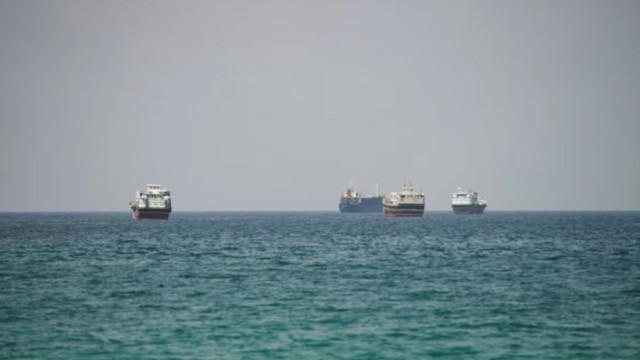
Trump’s remarks came as global fuel prices have surged amid the ongoing conflict involving the United States, Iran and Israel. Concerns over shipping through the Strait of Hormuz have further intensified fears about disruptions to global energy supplies.
International crude oil prices rose to around $108 a barrel this week amid concerns that the Middle East conflict could continue for an extended period. US diesel prices also reached a record high, exceeding $6 per gallon for the first time on Friday.
According to maritime intelligence firm Kpler, Russia is the world’s second-largest diesel exporter after the United States. Sustained Ukrainian drone attacks on Russian fuel infrastructure have therefore raised concerns about their potential impact on international energy markets.
Ukraine has intensified long-range drone strikes against Russian fuel facilities in recent months, damaging several major processing sites and reducing Russia’s refining capacity. Russia and Ukraine have also continued to escalate their aerial attacks against each other.
Meanwhile, Ukrainian authorities said a Russian drone struck a gas station in the northwestern town of Yahodyn near the Polish border early Sunday.
Ukrainian Foreign Minister Andrii Sybiha condemned the attack, describing it as a “barbaric attack” near the Ukraine-Poland border crossing. He said the strike represented “Putin’s terror knocking directly at the doors of the European Union and NATO.”
The border crossing was temporarily closed following the attack but resumed normal operations by 10am local time on Sunday.
Yahodyn is one of several important crossings between Ukraine and Poland and serves as a route for Western military and humanitarian assistance to Ukraine.
Polish Foreign Minister Radosław Sikorski, speaking with Ukrainian officials in Kyiv, warned of the broader implications of the attack. He said Russia had used advanced drones equipped with jet engines and sophisticated guidance systems, describing the development as a new dimension of the conflict and a serious challenge for Ukraine and European security.
Ukrainian Railways also reported that a Russian drone struck the engine of a passenger train about two kilometers from the Polish border.
The railway authority said a diplomatic train at Yahodyn was carrying security advisers from several EU member states and former European leaders, including former British Prime Minister Boris Johnson, shortly before the attack.
It also reported that former CIA Director David Petraeus was aboard another train at Yahodyn station when the attack occurred.
The developments have brought renewed attention to US concerns over Ukrainian attacks on Russian energy infrastructure, while Russian strikes close to the Polish border are raising fresh concerns about the wider regional implications of the war and European security.
END/SMA/AJ