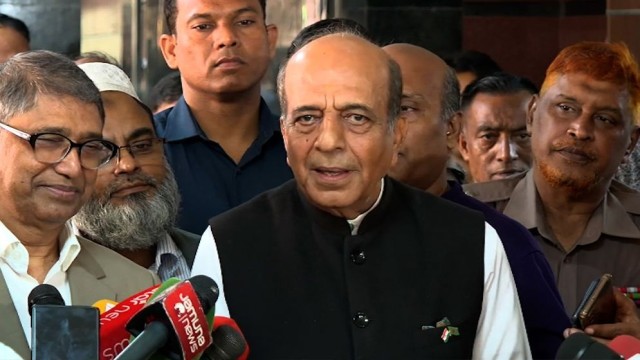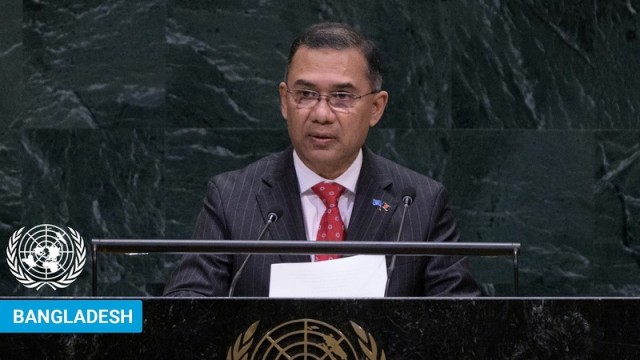
Dhaka, Oct 03 (V7N)- Prime Minister Tarique Rahman has said the Rohingya crisis originated in Myanmar and therefore its lasting solution must also come from Myanmar, stressing that Bangladesh's priority is the rapid, voluntary, safe, dignified and sustainable repatriation of Rohingya refugees.
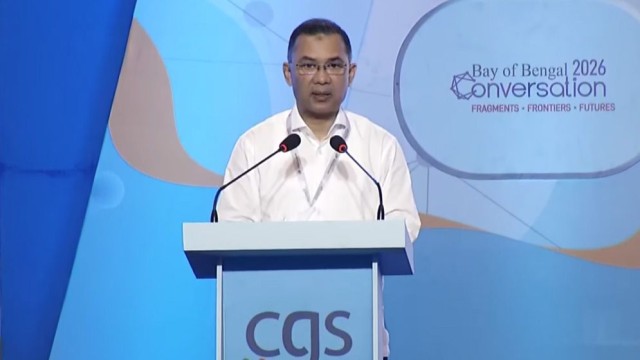
He made the remarks while inaugurating the fifth Bay of Bengal Conversation 2026 at the Pan Pacific Sonargaon Hotel in Dhaka on Saturday. The three-day international forum, organised by the Centre for Governance Studies, is being held from October 3 to 5.
Tarique said Bangladesh continues to host about 1.2 million Rohingya refugees and has been carrying the responsibility for their humanitarian needs for an extended period. He called for sustained political support and international financing to address the crisis.
The Prime Minister said repatriation alone would not be sufficient and that the underlying causes of the crisis must also be addressed. According to him, a crisis that began in Myanmar must ultimately be resolved there.
Turning to the wider Bay of Bengal region, Tarique highlighted Bangladesh's strategic location, seaports, waterways and coastal economy. He said there was significant potential for cooperation in shipping, fisheries, tourism, energy and regional supply chains.
He called for stronger regional cooperation in trade, energy, education, technology, climate and maritime affairs. Bangladesh, he said, would engage positively with regional and global partners while protecting its national interests and sovereignty.
Outlining the government's five-year priorities, Tarique said the administration would focus on national interests, policy continuity, economic stability and institutional reforms. He also highlighted planned initiatives in investment, employment, health, education, agriculture, water security and environmental protection.
The Prime Minister highlighted proposed social protection programmes including Family Cards, Farmer Cards, Health Cards and a Universal Card. He also said the government plans to recruit 100,000 healthcare workers to strengthen grassroots healthcare, with women expected to account for a large majority of the recruits.
In education, he spoke of creating a more supportive learning environment while giving greater importance to culture, sports, values and ethics. He outlined plans for free uniforms, school bags, midday meals and scholarships from the first grade, as well as expanding free education opportunities for girls.
Tarique also stressed skills development, employment, technological transformation and artificial intelligence, saying the government would support innovation, entrepreneurship and startups. He said the aim was to turn "brain drain" into "brain circulation" by making young Bangladeshis more competitive globally.
On agriculture and water management, he highlighted support for technology, irrigation, agricultural financing and market access, alongside plans to expand agro-processing and agricultural exports. He also outlined a five-year plan to excavate 20,000 kilometres of canals and waterways and advance water-management initiatives, including the Teesta Master Plan.
The Prime Minister further announced an environmental target of planting 250 million trees over five years and called for greater use of solar power, waste recycling and environmentally friendly industries.
On institutional reform, Tarique said strong state institutions were essential for development and stressed the importance of human rights, democratic values, freedom of expression and equal application of the rule of law.
He concluded by calling for the Bay of Bengal to become a region where countries can develop together, share mutual benefits and deepen cooperation among their peoples.
END/SMA/AJ