Rajshahi, Sept 30 (V7N) – Rajshahi, once known as the “city of ponds,” is facing growing environmental pressure as its green spaces and natural water bodies continue to shrink amid rapid and unplanned urbanisation.
Research and local administrative sources indicate that the city has lost a significant portion of its green areas over the past three decades, while nearly 800 ponds have reportedly disappeared in the last decade alone.
In 2014, around 952 small and large ponds were recorded in Rajshahi city. The number has now fallen to around 200, according to local sources.
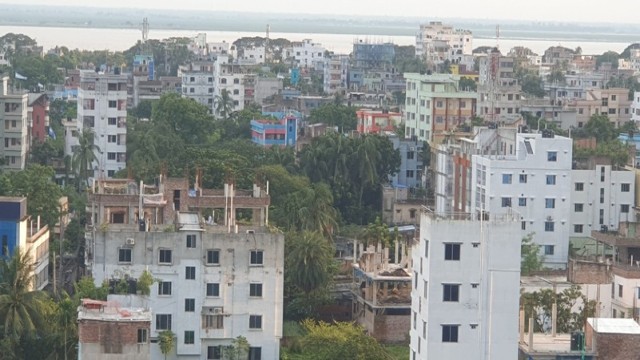
Many of the water bodies have been filled to make way for government and private infrastructure, multi-storey buildings, markets and residential developments.
A recent study by researchers at Rajshahi University found that the city’s green area had declined by about 26 percent over three decades. During the same period, the area covered by brick-built infrastructure increased from 9.73 square kilometres to around 22.99 square kilometres.
Despite administrative drives, fines and legal restrictions aimed at preventing the filling of ponds, residents say the practice continues in different parts of the city.
They alleged that even when authorities stop illegal filling operations, a lack of regular monitoring allows some people to resume dumping soil after a few days. In many cases, soil is reportedly transported by trucks or other vehicles and dumped into ponds at night.
Some water bodies are also gradually being filled with garbage and construction materials, reducing their depth.
Residents recently alleged that a pond covering around two bighas in the Hargram area was being filled again. They said the rising commercial and residential value of land has encouraged some influential groups to take risks by filling natural water bodies.
Environmental experts warn that the loss of ponds and vegetation is also contributing to rising local temperatures.
Professor Dr Chandan Ray of the Department of Geography and Environmental Studies at Rajshahi University said ponds serve not only as water reservoirs but also help regulate urban temperatures and absorb excess rainwater.
“The reduction of wetlands and green areas is contributing to an urban heat island effect, increasing temperatures in different parts of the city,” he said.
Data from the Rajshahi Meteorological Office also show that the city has experienced extreme heat in recent years. The highest temperature recorded in Rajshahi was 42.8 degrees Celsius in 2005. Temperatures reached 42.02 degrees Celsius in 2007, 42.6 degrees in 2014 and 43 degrees in 2024. The highest temperature recorded in 2026 was 40 degrees Celsius.
Experts say global climate change is contributing to rising temperatures, while the growing amount of asphalt, brick and concrete and the decline in trees and vegetation are intensifying heat at the local level.
The disappearance of ponds is also creating challenges for firefighting operations.
According to Rajshahi Fire Service officials, although many multi-storey buildings have their own water reservoirs, open natural water sources remain an important resource for firefighters during major fires. The loss of ponds therefore increases the difficulties and risks involved in firefighting.
The Bangladesh Environmental Lawyers Association (BELA) has also raised concerns about the condition of rivers, canals and wetlands across the Rajshahi region, saying many have been affected by encroachment and filling.
Tanmay Kumar Sanyal, Rajshahi coordinator of BELA, said the disruption of the natural flow of rivers and canals was affecting groundwater recharge during the rainy season and contributing to more extreme weather conditions.
He also expressed concern over the unplanned excavation of ponds on agricultural land in rural areas for fish farming, as well as the indiscriminate felling of trees for road expansion and other development projects.
Rajshahi Additional District Commissioner Mohinul Hasan said the administration was taking action whenever it received information about the filling of a pond.
“No permission has been given to change the classification of any pond in Rajshahi metropolitan area over the past two years,” he said, adding that the administration would maintain its strict position to protect the remaining water bodies.
Rahatul Kabir Mizan, assistant land officer of Boalia police station area, said long-term measures were needed alongside enforcement drives.
He called for the creation of a digital database of water bodies, satellite-based monitoring and strict legal controls on changes in land classification.
Rajshahi City Corporation Administrator Mahfuzur Rahman Riton said surveillance had been strengthened against people allegedly attempting to profit by filling ponds and water bodies.
He said coordinated measures would be taken by relevant agencies to preserve the remaining water bodies and maintain Rajshahi as a liveable, modern and well-planned city.
END/MRA/SMA/