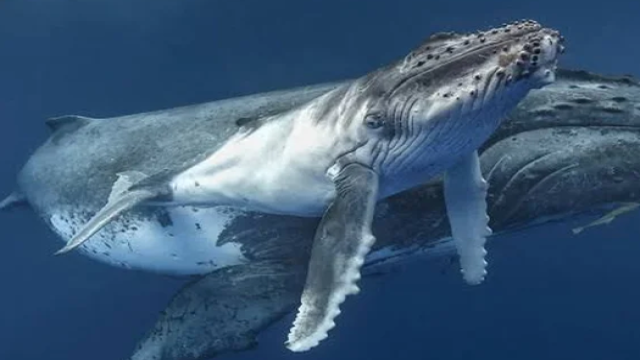
Sydney, Sept 16 (V7N) – A female humpback whale has been documented apparently grieving a stillborn calf in new research released Thursday, offering rare insights into the complex emotions of the sea-dwelling mammals.
The footage, taken off Australia's Gold Coast last year, shows a female humpback whale staying close to the dead calf as it lies motionless on the sea floor. Accompanied by a companion, the whale holds eye contact with the animal, touching it with its head and fin.
"At first sight, I thought it was just two whales resting on the surface, but their behaviour was unusual," said Andrew Mulville from Sea World Foundation, who witnessed the moment. "It was definitely not what I was expecting to see out at sea that day."
Researchers said the whale had stayed with the deceased animal for "several hours and possibly even days." A number of other deceased whale calves were observed in the area at the time, the researchers said.
The whale did not try to bring the calf to the surface, suggesting "she might have been aware that it was dead shortly after giving birth," they said. Researchers said the whale's actions "may represent a form of grief-related behaviour in humpback whales."
Olaf Meynecke of Griffith University's Whales and Climate Research Program told AFP, "It's really sad. It's pretty heartbreaking to watch this female making continuous contact with the deceased calf."
Meynecke said his research spoke to the "strong bond" between mother and calf and the emotional stages that "socially complex" mammals go through following the deaths of their offspring or companions.
Whales are far from the first non-human mammals to have been observed engaging in complex grieving rituals, Meynecke said. "We're seeing this from elephants and apes and cases like that that are also extremely heartbreaking. But on land we witness this more often, whereas at sea it's really rare to document something like this."
The research adds to a growing body of evidence that cetaceans—whales, dolphins, and porpoises—possess sophisticated cognitive and emotional capacities. Previous studies have documented dolphins and whales appearing to mourn deceased companions, but such observations remain rare due to the logistical challenges of studying marine mammals in the wild.
The findings underscore the importance of understanding the emotional lives of whales for conservation efforts. Humpback whales, once hunted to near extinction, have made a remarkable recovery since the ban on commercial whaling in 1986. However, they continue to face threats from ship strikes, entanglement in fishing gear, climate change, and habitat degradation. Researchers say that recognizing the complex social and emotional lives of these animals can help inform conservation policies and public awareness.