Dhaka, Sept 15 (V7N) – Education Minister Dr ANM Ehsanul Hoque Milon today called for strengthening the centralised monitoring system at educational institutions to ensure sustainable improvement in boosting the country's education quality.
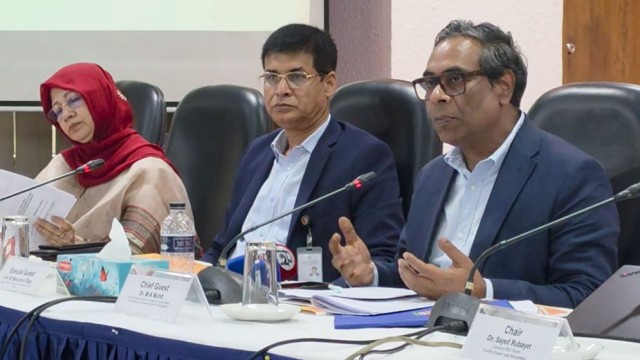
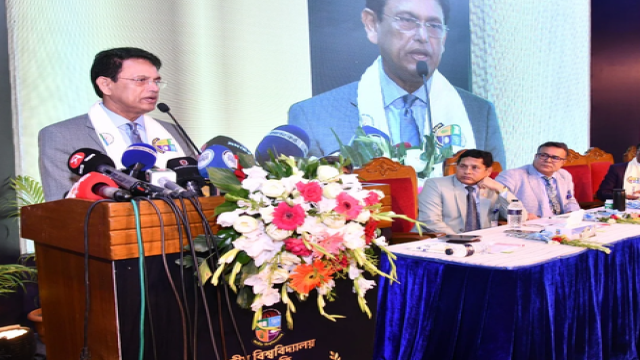
"It is important to centrally monitor teachers' attendance in classrooms and their teaching methods to ensure the quality of education. Colleges under the National University (NU) can take steps to monitor classrooms through their own management systems," he said while addressing the "National University Scholarship and Vice-Chancellor Award Giving Ceremony" as chief guest at the International Mother Language Institute in the capital.
Milon stressed that the quality of education at the university level needs to be improved further. "Introducing market-demand-based courses, providing modern training to teachers, and revising and modernizing the curriculum are the demands of the time to ensure employment for students," he said.
The minister noted various initiatives taken by the current government to improve education quality and urged the respective people and authorities to make the best use of the allocated funds to bring about a real transformation in education.
The minister handed over certificates, crests and cheques of **Taka 25,000** to each of the **57 meritorious students** selected for the "Vice-Chancellor Award" this year. Besides, it was informed that a total of **Taka 1 crore 73 lakh 82 thousand** was provided as scholarships at the rate of **Taka 6,000 each** to **2,897 students** from the university's own fund in 2025.
NU Vice-Chancellor Professor Dr ASM Amanullah chaired the event, while Prof Md Lutfor Rahman delivered the welcome address. Secretary of the Secondary and Higher Education Division Abdul Khaleque spoke as a special guest.
The National University is one of the largest affiliating universities in the world, overseeing thousands of colleges and institutions across Bangladesh. The government has been taking various initiatives to improve the quality of education at the tertiary level, including curriculum reforms, teacher training programmes, and the introduction of market-oriented courses. The emphasis on centralized monitoring reflects concerns about classroom attendance and teaching quality at affiliated colleges.
end/aj/rh/