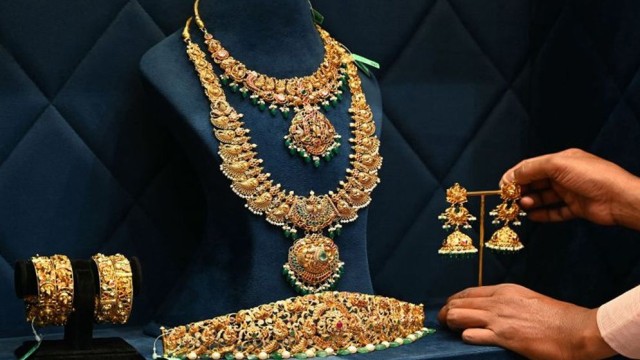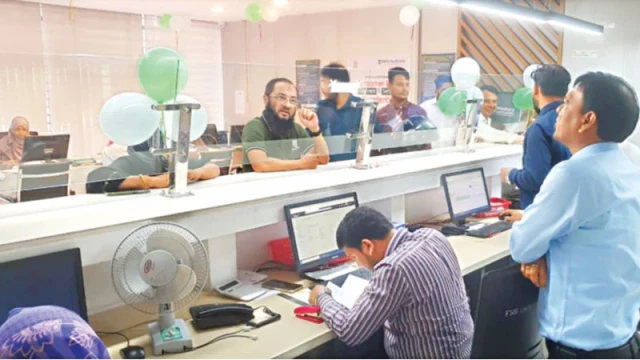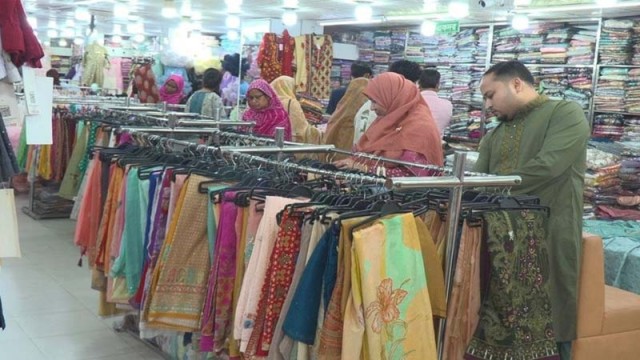
Rajshahi, Sept 16 (V7N) – Rajshahi was once synonymous with shimmering silk sarees, soft and smooth fabrics and a thriving silk industry that formed an important part of the region’s identity, pride and economy.
But the once-glorious industry is now facing an uncertain future. A visit to the city’s traditional silk showrooms reveals a significant shift: shelves that once showcased locally produced silk are increasingly filled with Indian sarees, Chinese fabrics, non-silk three-piece outfits and various ready-made garments.
Rajshahi’s own silk appears to be losing ground in its traditional home.
Business owners say it has become increasingly difficult to sustain their operations by selling silk alone. Production costs have risen sharply, while consumers are increasingly looking for relatively cheaper products. As a result, retailers are being forced to stock other types of clothing to keep their businesses running.
Saidur Rahman, manager of Sapura Silk Mills Ltd, said relying solely on silk had become difficult for the industry.
“Although production costs have increased, the market is not offering prices accordingly. As a result, we have had to add non-silk products to keep the business afloat,” he said.
Once, Rajshahi’s silk industry operated as a complete economic chain involving mulberry farmers, silkworm rearers, cocoon producers, yarn manufacturers, weavers and traders. Almost every link in that chain has now weakened.
According to data from the Bangladesh Sericulture Development Board, the country’s annual demand for silk yarn is around 400 tonnes, while domestic production stands at only 40 to 42 tonnes. As a result, a large portion of the market now depends on imported silk yarn.
Zahurul Islam, general manager of the traditional Usha Silk in Rajshahi, said the Sericulture Development Board had failed to keep the local production system functioning effectively.
“As a result, we are compelled to import yarn from abroad to meet local demand,” he said.
He added that silk yarn that sold for Tk 3,000-4,000 per kilogramme five years ago now costs around Tk 9,000, significantly increasing the production cost of silk fabrics.
The rising costs have also affected consumers. A silk saree that could be purchased for Tk 3,000-4,000 a decade ago now costs around Tk 9,000-10,000 for a similar quality. As a result, a large section of middle-income consumers are turning away from silk products.
The crisis has also affected mulberry cultivation, once a major source of income for many farmers in northern Bangladesh.
Farmers have gradually abandoned the crop because of low returns, labour-intensive cultivation and inadequate support. The area under mulberry cultivation stood at 148.5 acres in 2015 but had fallen to 137.61 acres by 2024.
Abdul Awal, a mulberry farmer in Charghat upazila of Rajshahi, said silk farming had been a family tradition for generations.
“Even my ancestors cultivated mulberry. But because of low returns and a lack of government incentives, I have significantly reduced the amount of land I cultivate,” he said.
According to the Bangladesh Silk Industries Owners Association, 70 of the 76 private silk factories in the Rajshahi BSCIC industrial area are currently closed. Industry stakeholders identify shortages of raw materials as one of the main reasons behind the closures.
Professor Dr Aminuzzaman Saleh Reza of the Department of Zoology at Rajshahi University said the closure of state-run silk factories, the entry of low-quality imported silk and weaknesses in the domestic production system had pushed the industry to the brink of collapse.
He said reviving the silk industry would require an integrated model covering the entire production chain, from silkworm egg production and cocoon rearing to yarn production, mulberry cultivation and marketing.
“Without training for farmers, access to affordable loans, technical assistance and fair prices, it will be difficult for the industry to recover,” he said.
Dr M.A. Mannan, director of Finance and Planning at the Bangladesh Sericulture Development Board, said the government alone could not revive the sector.
“Entrepreneurs must also come forward to help bring new life to the silk industry,” he said.
END/MRA/SMA/