Rangamati, Sept 16 (V7N) – Decisions on the conservation and management of water in Kaptai Lake will prioritise the lives, livelihoods, farming and living conditions of communities displaced by the creation of the lake, as well as people living along its shores and in low-lying areas, a technical subcommittee responsible for managing the lake has said.
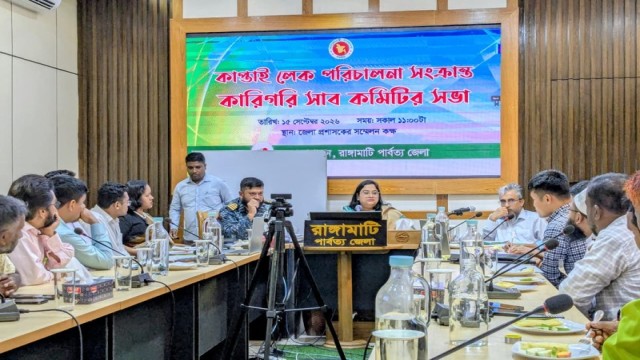
The decision was taken at a meeting of the Kaptai Lake Management Technical Subcommittee held at the conference room of the Rangamati Deputy Commissioner's Office on Tuesday afternoon, September 15.
The meeting discussed the current water level of Kaptai Lake, water conservation, spillway operations and the hardships faced by residents of low-lying areas, including Baghaichhari and Langadu, as a result of water discharge from the lake.
The meeting decided that, as rainfall in the Rangamati region has been comparatively low this season, necessary measures would be taken to conserve water in Kaptai Lake.
However, the committee said water conservation measures must take into account the livelihoods, agricultural activities and living conditions of people living in low-lying areas around the lake, as well as those who were displaced when Kaptai Lake was created.
Under the technical subcommittee's decision, water will be conserved as necessary from September 15 until the lake reaches its danger level.
It was also decided that the spillway gates opened to release water during the period of risk would remain closed if conditions remain normal.
The meeting also discussed ways to reduce public suffering in Baghaichhari and Langadu caused by water discharge from the lake, alongside broader issues concerning spillway operations and water management.
The committee also discussed a letter from Chattogram WASA requesting that two turbines at the Kaptai Hydroelectric Power Station remain operational from November to May to address the risk of saline water entering the Halda River.
The meeting further discussed a programme organised by Chattogram WASA on September 14 and statements published in the media concerning Kaptai Lake's water management and the Rangamati Deputy Commissioner.
The chairperson, member secretary and other members of the technical subcommittee said some of the reports had been exaggerated or published with distorted information and expressed their protest.
Based on the collective decision of the meeting, it was decided that a formal protest would be lodged regarding the letter sent by Chattogram WASA to the manager of the Kaptai Hydroelectric Power Station and the statements circulated in the media.
Meanwhile, during the meeting, local representatives, journalists and people from different professions from Langadu upazila praised the measures taken by the district administration.
They thanked the district administration and the technical subcommittee for steps taken to manage Kaptai Lake's water levels with the aim of reducing flood damage and prolonged waterlogging this year.
Local residents said that significant sedimentation had accumulated in Kaptai Lake during the 66 years since the Kaptai Dam and reservoir were created in 1960.
As a result, they said, even when the water level remains at 105 feet MSL near the Kaptai Hydroelectric Power Station, water levels in some upstream and lakeside areas, including Langadu, can become considerably higher.
This creates a significant gap between decisions to conserve water in the lake and the actual situation faced by people living in low-lying areas, they said.
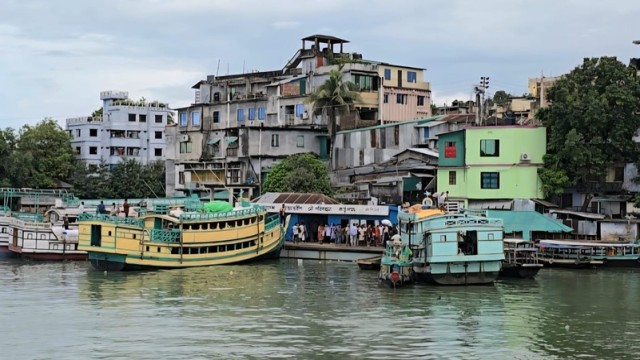
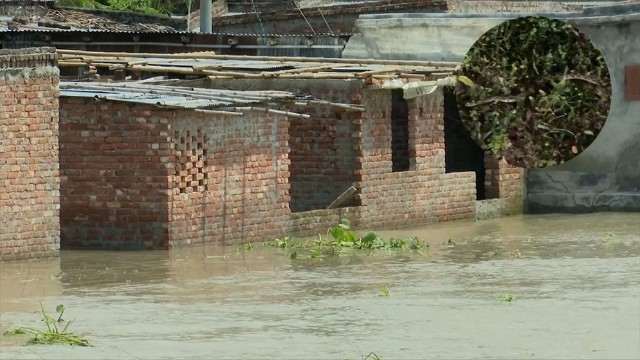
Residents claimed that people in low-lying areas of Baghaichhari, Langadu, Jurachhari and Bilaichhari are affected by prolonged waterlogging every year.
Their homes, farmland and crops are damaged, while their normal lives and livelihoods are disrupted. Many families are also unable to cultivate their land for a significant part of the year, they said.
At the meeting, local representatives called for greater and more effective participation of lake-dependent communities and relevant stakeholders in the Kaptai Lake Management Technical Subcommittee.
They also urged authorities to conduct field visits to lakeside and low-lying areas and consider the views of local residents before making decisions on water management.
They further called for the existing technical subcommittee to be reconstituted to include representatives of Rangamati and Kaptai Lake-dependent communities, local elected representatives and relevant stakeholders.
It was decided that the matter would also be brought to the attention of the higher authorities.
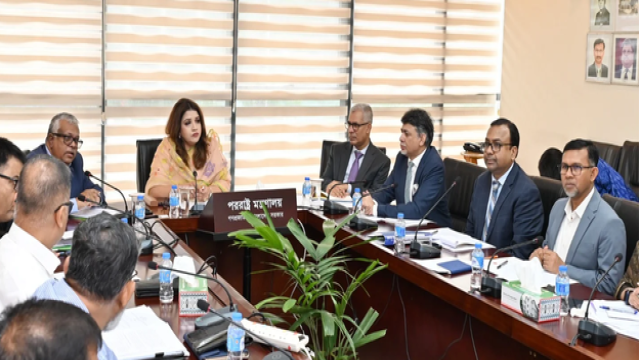
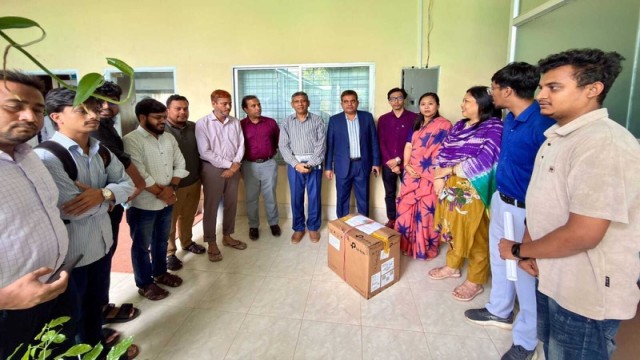
The meeting was chaired by Rangamati Deputy Commissioner Nazma Ashrafi.
Manager of the Karnaphuli Water Power Station Mahmud Hasan, the manager of Rangamati BFDC, Additional District Magistrate, representatives of the Water Development Board and Department of Agricultural Extension, other relevant officials, and the president of Rangamati Press Club and local journalists attended the meeting.
END/AMR/SMA/